
Lubricating a door lock is one of the simplest ways to prevent failures, improve security, and extend the life of your hardware. Many lock problems begin with friction, dirt, and poor maintenance. At The Locksmith Journal, we focus on practical steps that help homeowners and tenants avoid lockouts and costly repairs. This guide explains how to lubricate a door lock correctly, why a lock cleaner matters, how to choose the best lubricant for locks, and how good maintenance supports everyday security, including key safety tips for apartment residents.
Why Door Locks Need Lubrication
Door locks contain small moving parts that must align perfectly every time you turn the key. Pins, springs, and cylinders wear down as dust and moisture build up. Without lubrication, metal rubs against metal, causing resistance and damage.
Common warning signs include:
- A stiff or grinding key turn
- Difficulty inserting or removing the key
- Delayed locking or unlocking
- Inconsistent latch movement
Ignoring these signs often leads to lock failure or a full lockout. Regular lubrication keeps the mechanism smooth and responsive.
Start with a Lock Cleaner
Before lubricating, the lock must be clean. Applying lubricant to a dirty lock traps debris inside and worsens performance. A lock cleaner removes dust, grit, and residue left behind by old products.
Use a lock cleaner when:
- The lock feels gritty
- Oil or grease was used previously
- The lock has not been maintained for years
- The door is exposed to dust or humidity
Spray the cleaner into the keyway and insert the key several times. This flushes out contaminants and prepares the lock for lubrication. Allow the lock to dry fully before adding lubricant.
Choosing the Best Lubricant for Locks
Not all lubricants are safe for door locks. Heavy oils and greases attract dirt and create sticky buildup. Over time, this causes sticking and internal damage.
The best lubricant for locks is a PTFE-based product. PTFE lubricants apply as a liquid and dry into a thin protective layer. They reduce friction without leaving residue and perform well in both hot and cold conditions.
Benefits of PTFE lubricants include:
- Clean application
- Resistance to dust and moisture
- Smooth key and latch movement
- Long-lasting protection
Graphite powder is sometimes used, but it has limits. It clumps in humid environments and blocks the keyway if overapplied. PTFE lubricants provide more reliable results for modern locks.
How to Lubricate a Door Lock Properly
Correct application is simple but important. Follow these steps:
- Ensure the lock is clean and dry
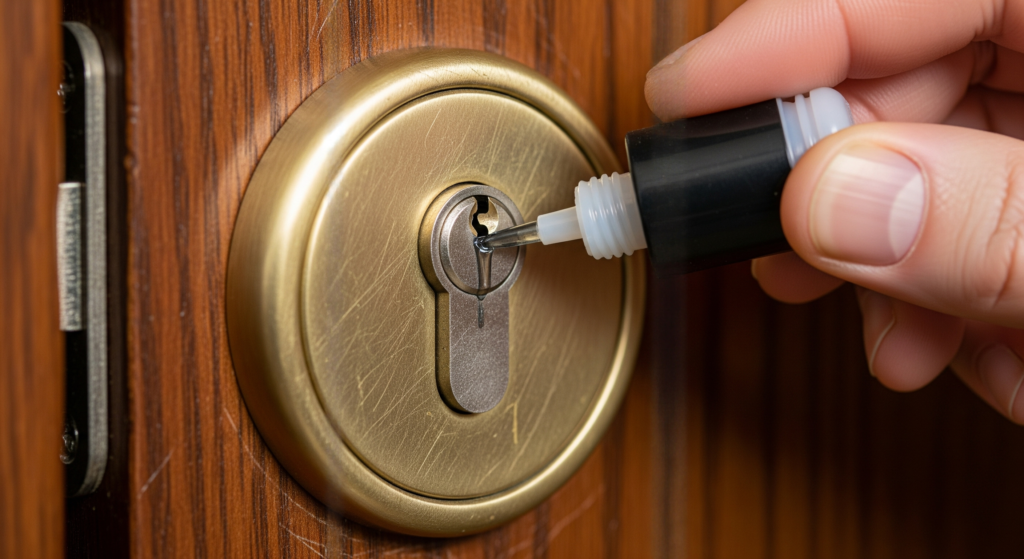
- Spray a small amount of lubricant into the keyhole
- Insert the key and turn it several times
- Operate the latch to spread the lubricant
- Wipe away any excess
Avoid overuse. A light application works best. Too much lubricant causes buildup, even with high-quality products.
How Often You Should Lubricate
A regular schedule prevents emergencies and improves lock lifespan.
Recommended intervals:
- Exterior doors: every 6 to 12 months
- High-use doors: every 6 months
- Interior doors: every 1 to 2 years
- Humid or coastal areas: every 3 to 6 months
Seasonal inspections help catch problems early.
Safety Tips for Apartment Residents
Apartment living increases wear on locks due to shared hallways, frequent use, and environmental exposure. Following proven safety tips for apartment residents keeps your door secure and functional.
Important habits include:
- Lubricate locks regularly to prevent sticking
- Report loose handles or misaligned doors
- Rekey locks when moving into a new unit
- Avoid hiding spare keys in common areas
- Verify visitors before opening the door
- Keep entry areas well lit
A well-maintained lock is harder to force and less likely to fail.
When Lubrication Is Not Enough
If the lock remains stiff after cleaning and lubrication, internal parts may be worn or damaged. Continued use increases the risk of complete failure.
A professional locksmith can:
- Inspect internal components
- Repair worn pins or springs
- Replace damaged cylinders
- Recommend upgrades for better security
At The Locksmith Journal, we stress addressing small issues early to avoid costly emergencies.
Why Proper Lubrication Matters
Lubricating a door lock protects your security, saves money, and prevents frustration. It keeps your door working when you need it most. Combined with cleaning and smart habits, lubrication forms the foundation of reliable lock performance.
Final Thoughts from The Locksmith Journal
Regular maintenance makes a difference. Using a lock cleaner, applying the best lubricant for locks, and following trusted safety tips for apartment residents helps you avoid lockouts and extend hardware life. Lubricating a door lock is quick, affordable, and essential for long-term security.