
A lock should turn smoothly every time you use it. When it does not, frustration and security risks follow. At The Locksmith Journal, we focus on simple maintenance steps that prevent failure, reduce wear, and protect access points in homes and workplaces. This guide explains why lock lubricant matters, how it prevents a jammed lock on door, how to choose the best lubricant for locks, and why proper lock care supports systems such as a workplace access control system.
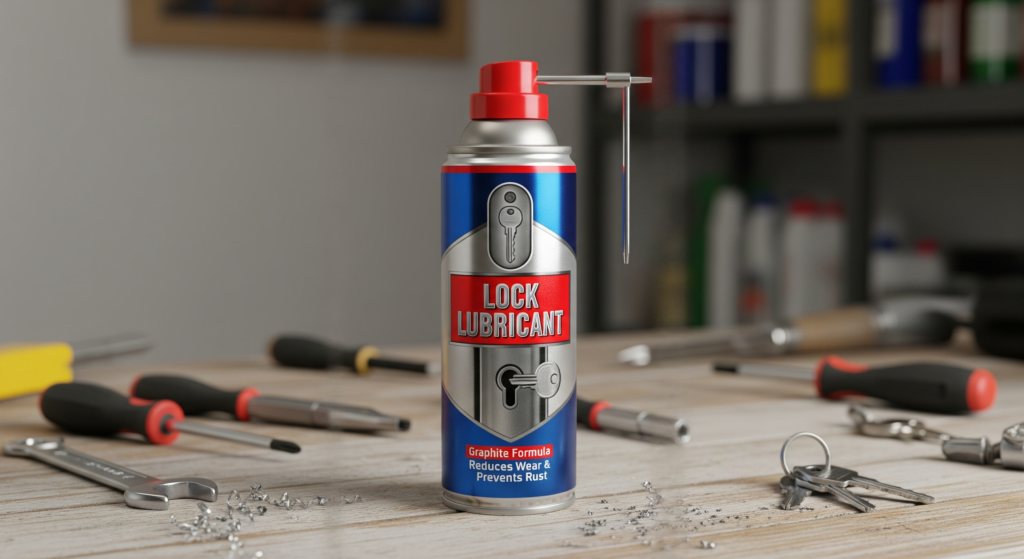
Why Lock Lubricant Is Essential
Locks contain small metal parts that move in tight spaces. Pins, springs, and cylinders rely on smooth motion. Dust, moisture, and daily use slowly increase friction. Without lubrication, parts grind against each other, leading to stiffness, sticking, and eventual failure.
A dry lock often shows early warning signs:
- The key feels rough when turning
- Extra force is needed to lock or unlock
- The key hesitates inside the cylinder
- The latch retracts slowly
Ignoring these signs often results in a jammed lock on door, which can leave you locked out or unable to secure the space.
Common Causes of a Jammed Lock on Door
A jammed lock on door rarely happens suddenly. It is usually the result of poor maintenance or incorrect products. Common causes include dirt buildup, rust from humidity, worn keys, and lack of lubrication.
Many people use household oils, thinking they will help. These oils attract dust and create sticky residue inside the lock. Over time, this buildup blocks internal movement and causes jamming.
The right lubricant solves this problem by reducing friction without trapping debris.
What Makes the Best Lubricant for Locks
Not all lubricants are suitable for locks. The best lubricant for locks must apply cleanly, resist dirt, and protect against moisture. PTFE-based lubricants are widely recommended because they dry into a thin protective layer.
Key benefits include:
- No sticky residue
- Reduced friction inside the cylinder
- Better performance in cold or humid conditions
- Longer-lasting protection
Graphite powder is sometimes used, but it has limitations. In humid environments it clumps and settles. Overuse blocks the keyway. PTFE lubricants offer more reliable results for modern locks.
Avoid grease, motor oil, or multipurpose sprays. These shorten lock lifespan and increase the risk of failure.
How to Apply Lock Lubricant Correctly
Correct application is simple but important. Follow this routine:
- Spray a small amount of lubricant into the keyhole
- Insert the key and turn it several times
- Allow the lubricant to spread inside the lock
- Wipe away excess residue
Do not overapply. Too much lubricant causes buildup, even with quality products. Light application works best.
If the lock remains stiff after lubrication, internal wear or misalignment may exist. In that case, professional inspection is advised.
Lock Lubrication and Workplace Security
Lock maintenance plays a critical role in business environments. Even when a workplace access control system is in place, mechanical locks remain part of the infrastructure. Backup doors, cabinets, and emergency exits still rely on physical locking mechanisms.
Poorly maintained locks can:
- Delay employee access
- Disrupt daily operations
- Cause security vulnerabilities
- Increase repair costs
Regular lubrication keeps these locks reliable and supports the overall performance of access control systems. Smooth mechanical operation ensures doors open and close correctly when credentials are used.
Preventive Maintenance Schedule
Consistency prevents emergencies. Use this simple schedule:
- Exterior locks: every 6 to 12 months
- High-traffic workplace doors: every 6 months
- Interior locks: every 1 to 2 years
- Humid or coastal environments: every 3 to 6 months
Routine care reduces lockouts, improves safety, and lowers long-term costs.
Lock Care Saves Time and Money
Emergency locksmith calls often happen because maintenance was ignored. A few minutes of lubrication prevents hours of downtime and costly repairs. This applies to homes, offices, and shared buildings alike.
At The Locksmith Journal, we stress prevention over reaction. A lock that works smoothly is less likely to fail under pressure and more likely to provide consistent security.
When to Call a Professional
If lubrication does not restore smooth operation, the lock may have worn pins, internal rust, or alignment issues. Continuing to use a damaged lock increases the chance of a full failure.
A professional locksmith can:
- Inspect internal components
- Repair or replace worn parts
- Recommend upgrades for better security
- Ensure compatibility with access control systems
Early service prevents larger problems later.
Final Thoughts from The Locksmith Journal
Lock lubricant is a small detail with a big impact. Using the best lubricant for locks prevents a jammed lock on door, supports reliable access, and protects both residential and commercial spaces. Whether you rely on traditional keys or a workplace access control system, smooth mechanical performance remains essential. With routine care and the right products, your locks will work when you need them most.