
A lock cleaner is one of the most overlooked tools in basic security maintenance. Dirt, dust, and residue build up inside locks over time, causing stiffness, poor key movement, and failure. At The Locksmith Journal, we focus on preventive care that keeps locks reliable and secure. This guide explains why lock cleaners matter, how they help prevent a jammed lock on door, when to follow up with the best lubricant for locks, and how proper lock care supports everyday security, including key safety tips for apartment residents.
Why Locks Need Cleaning
Locks operate with precision. Inside the cylinder are small pins and springs that must move freely. Dust, moisture, and old lubricant settle inside these parts. Over time, this buildup restricts movement and increases friction.
Common signs your lock needs cleaning include:
- Difficulty inserting or removing the key
- A gritty or rough feeling when turning the key
- Locks that hesitate before opening
- Inconsistent locking or unlocking
Ignoring these signs often leads to a jammed lock on door, which can leave you locked out or unable to secure your space.
What a Lock Cleaner Does
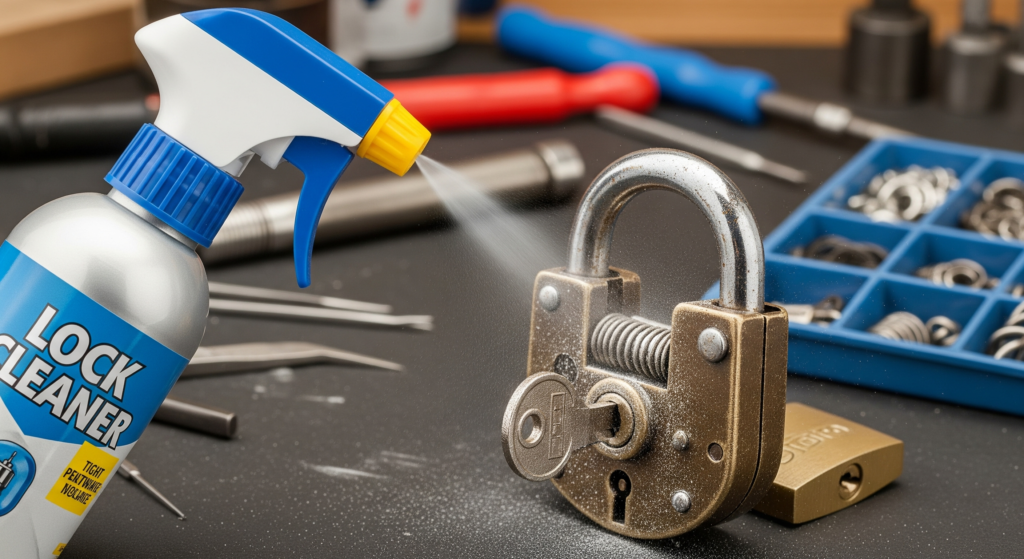
A lock cleaner removes debris, grime, and residue from inside the lock. Unlike lubricants, cleaners are designed to flush contaminants out of the cylinder. They restore movement by clearing pathways for the internal components.
Lock cleaners are especially useful when:
- Old oil or grease was previously used
- The lock has been exposed to dust or sand
- Moisture caused internal buildup
- The lock has not been maintained for years
Cleaning prepares the lock for proper lubrication and extends its lifespan.
Preventing a Jammed Lock on Door
A jammed lock on door rarely occurs without warning. It often starts with buildup inside the lock that slows down internal movement. When enough debris accumulates, the lock stops responding.
Using a lock cleaner removes this buildup before it becomes a serious issue. Cleaning followed by lubrication restores smooth operation and prevents key breakage or cylinder damage.
If your lock is already jammed, avoid forcing the key. Excess pressure may snap the key or damage the lock further. In some cases, professional cleaning or repair is required.
Cleaning vs Lubricating Locks
Cleaning and lubricating serve different purposes. Cleaning removes contaminants. Lubrication reduces friction and protects moving parts. Both are necessary.
After cleaning, apply the best lubricant for locks to protect the internal components. PTFE-based lubricants are preferred because they dry clean, resist dust, and perform well in varying temperatures.
Avoid oil-based products. Oils attract dirt and undo the benefits of cleaning.
A simple process:
- Spray lock cleaner into the keyhole
- Insert and remove the key several times
- Allow debris to flush out
- Let the lock dry
- Apply a light amount of PTFE lubricant
This routine keeps locks functioning properly.
Safety Tips for Apartment Residents
Apartment residents face shared security risks. Multiple tenants, visitors, and maintenance staff increase wear on locks and doors. Following proven safety tips for apartment residents reduces both security risks and maintenance problems.
Key practices include:
- Clean and lubricate your door locks regularly
- Report sticking or loose locks to management
- Rekey locks when moving into a new apartment
- Avoid hiding spare keys in common areas
- Check door alignment and strike plates
- Ensure entryways are well lit
A clean, well-maintained lock improves security and prevents unexpected lockouts.
Seasonal Lock Maintenance
Weather plays a role in lock performance. Humidity encourages rust. Dust increases in dry seasons. Cold temperatures cause metal contraction. Regular cleaning helps locks adapt to these changes.
Inspect locks at least twice a year:
- Check for smooth key movement
- Listen for grinding or resistance
- Look for signs of corrosion
- Clean locks exposed to outdoor elements
Seasonal maintenance reduces emergency repairs and prolongs hardware life.
When to Call a Locksmith
If cleaning and lubrication do not restore smooth operation, the lock may have worn or damaged internal parts. Continued use increases the risk of failure.
A locksmith can:
- Perform deep internal cleaning
- Repair worn pins or springs
- Replace damaged cylinders
- Recommend upgrades for better security
At The Locksmith Journal, we stress addressing problems early to avoid costly emergencies.
Final Thoughts from The Locksmith Journal
Lock cleaning is a simple step with major benefits. It prevents buildup, reduces friction, and helps avoid a jammed lock on door. When combined with the best lubricant for locks and smart maintenance habits, cleaning keeps your locks reliable and secure. Whether you live in an apartment or manage a property, proper lock care supports safety, convenience, and peace of mind.