
Choosing the best lubricant for locks keeps your doors secure, smooth, and reliable. Poor maintenance leads to sticking keys, damaged cylinders, and sudden lockouts. At The Locksmith Journal, we focus on practical lock care that prevents failures, protects property, and supports everyday safety. This guide explains why lubrication matters, how it prevents a jammed lock on door, and how proper lock care supports strong security, especially when combined with smart safety tips for apartment residents.
Why Locks Need Lubrication
Locks rely on precise movement. Inside each lock are pins, springs, and small metal components that align perfectly when you turn the key. Dust, moisture, and friction disrupt this alignment over time. When movement slows, resistance increases, and failure follows.
Without lubrication, locks suffer from:
- Grinding or stiff key turns
- Delayed locking or unlocking
- Internal corrosion
- Broken or bent keys
- Complete lock seizure
Using the best lubricant for locks reduces friction and protects these internal parts. It keeps the mechanism responsive and extends the life of the lock.
What Causes a Jammed Lock on Door
A jammed lock on door rarely happens without warning. Early signs often include hesitation when turning the key or the need to apply extra force. These issues usually result from dirt buildup, rust, or dried-out internal parts.
Forcing a jammed lock creates more damage. Keys snap. Cylinders crack. Repairs become expensive. Proper lubrication addresses the root cause and prevents these situations before they escalate.
What Makes the Best Lubricant for Locks
Not all lubricants suit locks. Many common household products cause more harm than good. Oil-based sprays and greases attract dust and create sticky residue. Over time, this buildup blocks internal movement and leads to failure.
The best lubricant for locks is a PTFE-based formula. PTFE lubricants apply as a liquid and dry into a clean, protective film. They resist dirt, moisture, and temperature changes. They also work well for both interior and exterior locks.
Key benefits of PTFE lubricants:
- Clean application with no residue
- Reduced friction without buildup
- Improved performance in humid or cold conditions
- Long-lasting protection
Graphite powder is sometimes used, but it has limits. In humid environments it clumps and settles. Overuse leads to blocked keyways. PTFE-based products provide more consistent and reliable results.
How to Apply Lock Lubricant Correctly
Proper application matters as much as product choice. Follow this simple routine:
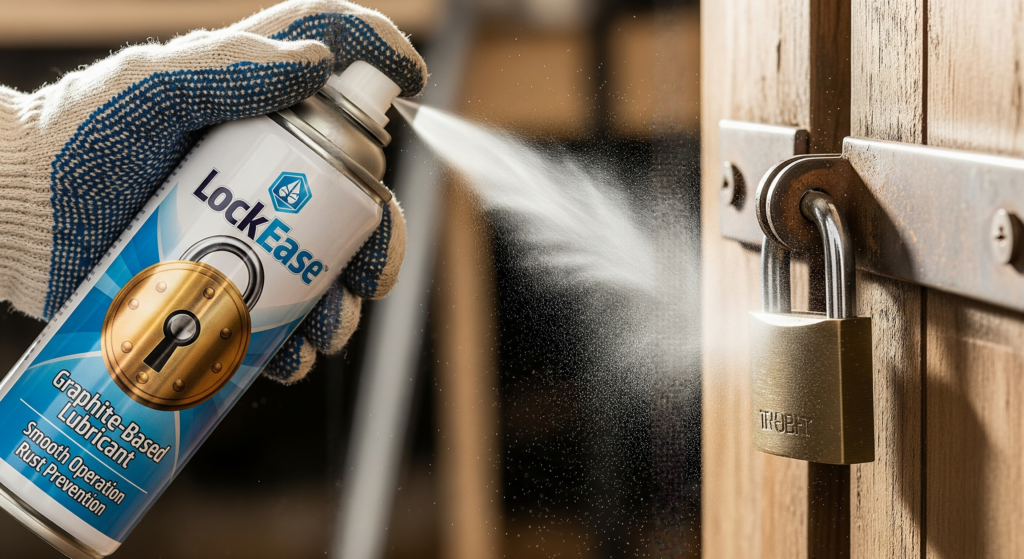
- Spray a small amount directly into the keyhole
- Insert the key and turn it several times
- Allow the lubricant to coat internal parts
- Wipe off excess from the lock face
Avoid overuse. Too much lubricant creates buildup, even with high-quality products. Light, controlled application works best.
For older locks showing rust or heavy debris, cleaning may be required before lubrication. If resistance remains after lubrication, professional inspection is recommended.
Maintenance Schedule for Reliable Locks
Consistent care prevents sudden failures. Use this guide:
- Exterior locks: every 6 to 12 months
- High-use doors: every 6 months
- Interior locks: every 1 to 2 years
- Humid or coastal areas: every 3 to 6 months
Routine lubrication keeps locks smooth and dependable.
Safety Tips for Apartment Residents
Shared buildings create added security challenges. Strong lock maintenance supports personal safety. Following proven safety tips for apartment residents reduces risks and prevents emergencies.
Key habits include:
- Keep locks lubricated and responsive
- Report loose hardware or sticking locks promptly
- Use deadbolts on primary entry doors
- Rekey locks when moving into a new unit
- Never hide spare keys in shared areas
- Verify visitors before opening the door
A poorly maintained lock weakens security. Smooth, well-functioning locks protect your space and support building safety.
When to Call a Locksmith
If lubrication does not restore smooth operation, the lock may have internal wear or damage. Continued use increases the risk of failure. A locksmith can inspect the mechanism, repair worn components, or recommend replacement.
At The Locksmith Journal, we stress prevention over emergency repair. Proper lubrication and inspection reduce costly lockouts and protect long-term security.
Final Thoughts from The Locksmith Journal
Using the best lubricant for locks is one of the simplest ways to protect your doors, prevent a jammed lock on door, and maintain reliable security. Combined with smart habits and consistent maintenance, lubrication keeps locks working when you need them most. Whether you live in an apartment or manage a property, good lock care saves time, money, and stress.