
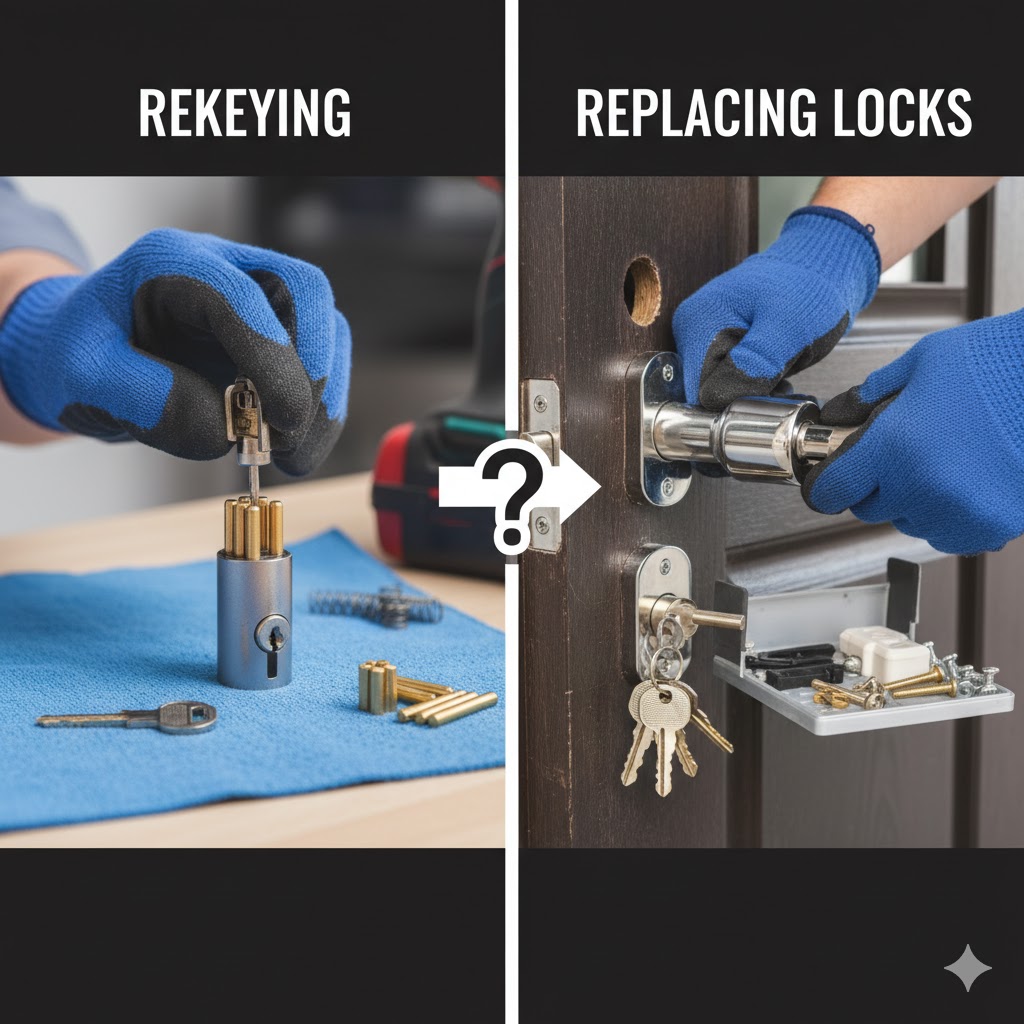
Have you ever wondered whether you should rekey or replace your locks when moving into a new home or after losing your keys? It’s a common question homeowners ask locksmiths every day. Both options enhance your home’s security, but they work differently — and knowing the difference can help you save time and money.
In this guide, we’ll explain everything you need to know about rekeying vs replacing locks, including when to choose each option, the pros and cons, and expert advice from trusted The Locksmith Journal professionals.
What Does Rekeying a Lock Mean?
Rekeying a lock means changing the internal pins and tumblers inside your existing lock so that old keys no longer work. Instead of removing the entire lock, a locksmith simply alters the mechanism to work with a new key.
How Rekeying Works
- The locksmith removes the lock from your door.
- They replace the old pins with new ones.
- A new key is cut to match the new configuration.
- The lock is reinstalled and tested for smooth operation.
It’s a quick, cost-effective solution — ideal for new homeowners, landlords, or anyone who wants better control over who has access to their property.
What Does Replacing a Lock Mean?
Replacing a lock involves removing the entire locking system and installing a new one. This could mean upgrading to a more secure lock, switching to a different style, or fixing a damaged mechanism.
When Replacement Is the Best Option
- Your current locks are old, worn out, or rusted.
- You want to upgrade to smart locks or high-security systems.
- The lock has been damaged during a break-in.
- You want a completely new look or door hardware style.
While replacing locks costs more than rekeying, it can provide greater peace of mind and modern security features.
Rekeying vs Replacing Locks: The Main Differences
| Feature | Rekeying | Replacing |
|---|---|---|
| Cost | Affordable | More expensive |
| Hardware | Keeps existing lock | New lock installed |
| Security | High (depends on lock quality) | Highest (new system) |
| Time | Fast and simple | Longer process |
| Purpose | Control access | Upgrade or fix damage |
If your locks are still in good condition, rekeying is often the smarter option. But if you’re looking for an upgrade or have security concerns, replacing the locks is worth the investment.
Which Option Is Better for You?
Choose Rekeying If:
- You’ve recently moved into a new home.
- You lost your keys and want to ensure no one else can use them.
- You want all your locks to work with a single key.
- Your locks are in good condition and work smoothly.
Choose Replacing If:
- Your locks are damaged, outdated, or difficult to use.
- You want a higher level of protection (e.g., smart or keyless locks).
- You’ve experienced a burglary or attempted break-in.
- You’re remodelling and want a new lock design.
A mobile locksmith near me can inspect your doors and recommend the best solution based on your needs and budget.
The Role of a Professional Locksmith
Whether you decide to rekey or replace, hiring a 24 hour locksmith ensures the job is done right. Professionals have the right tools, skills, and experience to handle any lock type — from traditional deadbolts to modern electronic systems.
A qualified locksmith can also offer additional security advice, such as reinforcing door frames, upgrading strike plates, or installing security cameras for complete protection.
If you’re locked out or need urgent help, an emergency locksmith service can come to your location anytime to secure your property.
Frequently Asked Questions (FAQs)
Q1: Is rekeying cheaper than replacing?
Yes, rekeying is generally much cheaper since it uses your existing hardware.
Q2: Can all locks be rekeyed?
Most standard locks can be rekeyed, but some older or damaged locks might require replacement.
Q3: How often should I rekey my home locks?
It’s a good idea to rekey whenever you move into a new property or lose your keys.
Q4: How long does rekeying take?
A locksmith can usually rekey a lock in 20–30 minutes, depending on the lock type.
The decision between rekeying and replacing locks comes down to your situation, budget, and security goals. Rekeying is ideal for cost-effective key control, while replacing is best for upgrading or fixing damaged locks.
Whichever you choose, professional locksmith services ensure your home remains secure and your locks function properly.
For expert advice, tips, and the latest updates from industry professionals, visit us for more information here: https://thelocksmithjournal.com/ — or subscribe to stay informed about the latest locksmith trends and home security solutions.